Fruits · Coconut
How to pick a ripe Coconut
Heavy for its size, dry eyes, clear water slosh — that's a fresh coconut
How to pick
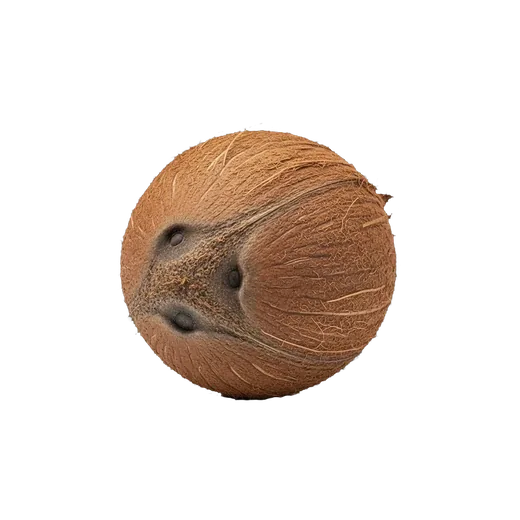
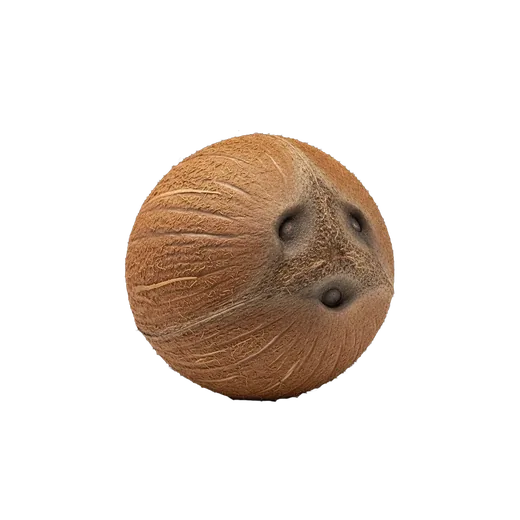
Lift the coconut before you examine it — it should feel dense and notably heavy for its size. A fresh mature coconut holds roughly half a cup to a cup of coconut water, and that weight tells you the moisture is still there. A nut that feels surprisingly light has already lost coconut water, and the flesh will be starting to dry out and turn stale. Then look at the three eyes clustered at the base of the nut: they should all be uniformly dark brown, dry, and intact with no shiny ring, no dampness, and no discoloration around any pore. Finally, hold the nut close to your ear and give it a gentle shake — you should hear a clear, satisfying slosh of liquid inside. Faint or absent sloshing means the coconut water has evaporated.
Red flags
- Feels light for its size or makes little sloshing sound when shaken — coconut water has evaporated and flesh will be dry and flavorless
- Moist or darkened ring around any of the three eyes — earliest sign of moisture breach and imminent mold entry
- Visible mold anywhere on the shell (fuzzy white, green, or black growth) — reject immediately; this is past the moist-eye warning stage
- Cracks visible anywhere in the shell — advanced desiccation or impact damage
- Gray areas on the shell surface — signals over-maturity or significant moisture loss
How to store
A whole, uncracked brown coconut keeps for several weeks at room temperature in a cool, dry spot out of direct sunlight. Refrigerated at 32–35 °F (0–1.5 °C) with high humidity (75–85% RH), it can last up to 60 days. Avoid large temperature swings, which can promote condensation around the eyes and accelerate mold. Do not wet or mist the outside; surface moisture at the eyes accelerates mold. Once cracked, refrigerate the flesh in an airtight container (submerged in water to prevent surface drying) and use within 3–4 days.
In the app
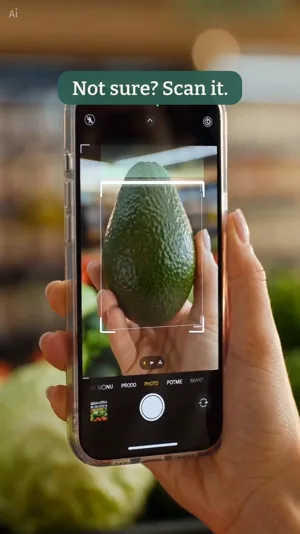
Scan
In the aisle, in seconds
Point the camera: pick or pass for that exact item, and the cue to trust next time.
Season where you live · Nutrients · Taste · Myths · Ayurveda


Free to install.
More to pick
Picking, storage, and freshness guidance is drawn from peer-reviewed postharvest research and agricultural extension sources. The sources are named in the app.