Vegetables · Bok Choy
How to pick a good Bok Choy
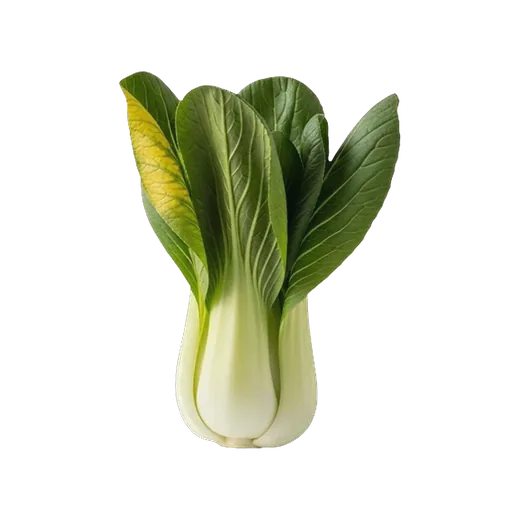
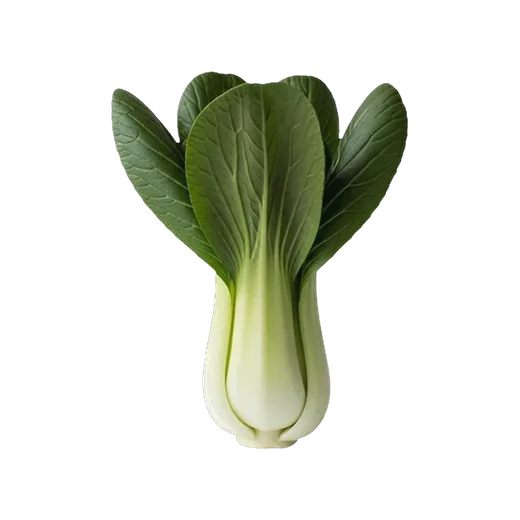
Deep dark-green leaves on crisp, rigid stalks — that's a head at its peak
How to pick
Color is your fastest cue: look for leaf blades that are a uniform deep, dark green — almost blue-green in the best heads. Then look at the stalks: fresh pak choi petioles are pure white (or pale jade on Shanghai baby types), thick, crisp, and rigid, meeting the leaves in a clean spoon-shaped base. Lift the head gently — fresh bok choy feels dense and heavy for its size, and the leaves hold their shape and stand upright rather than flopping over. At the cut stem base, a fresh head smells clean and mildly vegetal.
Red flags
- Brown spots, rusty streaks, or translucent water-soaked areas on the white stalks — decay starts in the petioles and spreads quickly
- A musty, sour, or ammonia-like smell at the stem base — the head is breaking down even if the leaves still look green
- A slippery or slimy film at the cut base or where outer leaves were trimmed — active rot
- A browned, dried, or split cut end at the bottom — the head was harvested or cut days ago
- Pooled water or condensation in bagged bok choy — standing moisture traps against the leaves and accelerates yellowing and rot
How to store
Refrigerate unwashed at 32–40 °F (0–4 °C) in a loosely sealed or perforated plastic bag with a slightly damp paper towel to keep humidity up without soaking the head. Use within 5–7 days. Wash just before use — standing moisture on the leaves speeds yellowing and decay.
In the app
Scan
In the aisle, in seconds
Point the camera: pick or pass for that exact item, and the cue to trust next time.

Season where you live · Nutrients · Taste · Myths · Ayurveda


Free to install.
More to pick
Picking, storage, and freshness guidance is drawn from peer-reviewed postharvest research and agricultural extension sources. The sources are named in the app.