Fruits · Papaya
How to pick a ripe Papaya
Smell the base — ripe papaya has a warm, musky aroma
How to pick
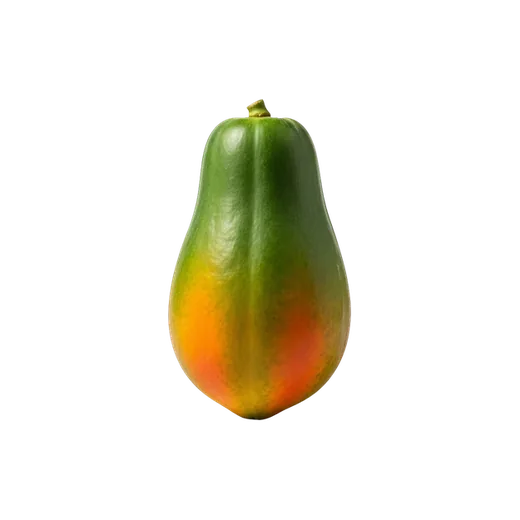
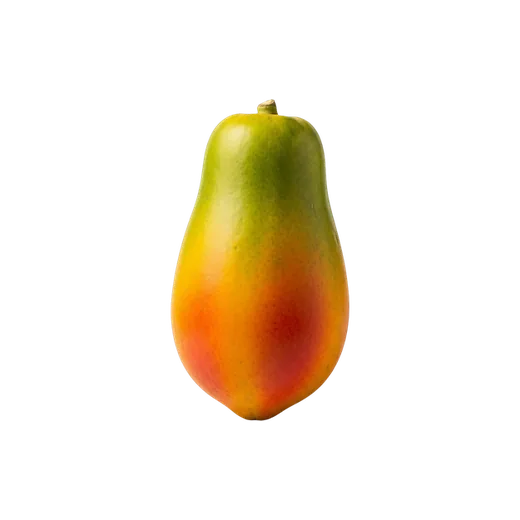
Hold the papaya near the stem or blossom end and inhale — a ripe papaya has a distinctive sweet, musky, floral aroma. A fully green papaya has almost no smell; if you cannot detect sweetness, it needs more time. As a visual check, the skin should show at least 50–75% yellow-orange color; fully green means days from ripe, fully deep yellow-orange means eat today. A ripe papaya also yields slightly under gentle whole-palm pressure — not squishy, just no longer rock-hard.
Red flags
- Uniformly hard, deep green skin with no hint of yellow — picked immature, may never ripen evenly at home
- Fermented, sharp, or unpleasant smell — overripe or beginning to ferment
- Very soft spots or sunken, water-soaked patches on the skin — decay inside
- Shriveled skin at the stem end or visible surface mold
When will it be ripe?
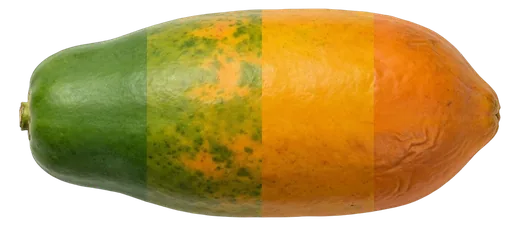
- All green · 1–3 days Deep green all over with no hint of yellow, hard to the hand, and almost no smell.
- Half yellow · nearly Yellow-orange coming up in patches over about half the skin, sweet musky smell just starting.
- Yellow-orange · eat now Deep yellow-orange over three quarters or more of the skin, a strong sweet musky floral smell, yielding slightly to a whole palm.
- Shriveled · use fast Shriveled skin at the stem end, very soft or water-soaked patches, smell turning sharp.
How to store
If still slightly firm and green-tinged, leave at room temperature out of direct sun for 1–3 days until fragrant and at least 50% yellow. Once ripe, refrigerate and use within 3–5 days. Store cut papaya tightly wrapped in the refrigerator and use within 3 days. Do not refrigerate unripe papayas — chilling below 50 °F (10 °C) causes chilling injury and uneven ripening.
In the app
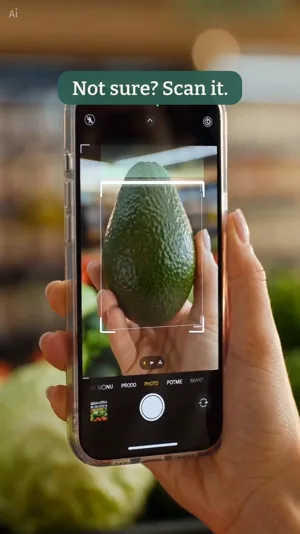
Scan
In the aisle, in seconds
Point the camera: pick or pass for that exact item, and the cue to trust next time.
Season where you live · Nutrients · Taste · Myths · Ayurveda


Free to install.
More to pick
Picking, storage, and freshness guidance is drawn from peer-reviewed postharvest research and agricultural extension sources. The sources are named in the app.