Fruits · Pear
How to pick a ripe Pear
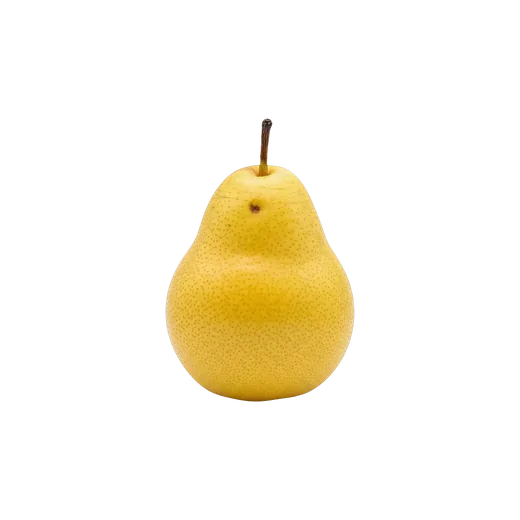
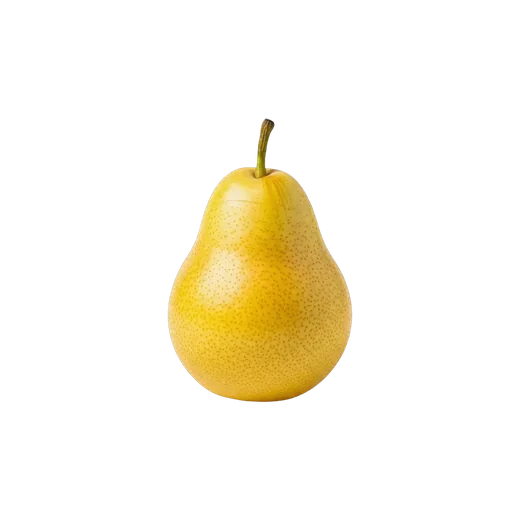
Bright gold from neck to base, on a pear that turns yellow — color is your ripeness signal
How to pick
On a pear that turns from green to yellow as it ripens — Bartlett, sold as Williams in many countries — color does the work: a ripe one shifts from green to yellow, and one that is still fully green needs more days at room temperature. On a pear that softens as it ripens, gently cradle it in your whole palm and press softly at the neck (narrow stem end): a ripe pear yields there while the body may still feel firm. On pears that don't change color as they ripen — russeted brown ones like Bosc, or ones that stay green like D'Anjou — color is not a reliable cue, and the neck check is the only reliable method. Hard pears — India's Patharnakh, and the round Asian pears — are eaten crisp, so the neck check doesn't apply: choose those by clean, unbruised skin.
Red flags
- Soft around the middle, not just at the neck — the pear is already overripe
- Soft spot anywhere on the body below the neck — bruising or early tissue breakdown
- Widespread wrinkling or puckering across the body (not just the neck) — significant moisture has been lost in storage
When will it be ripe?
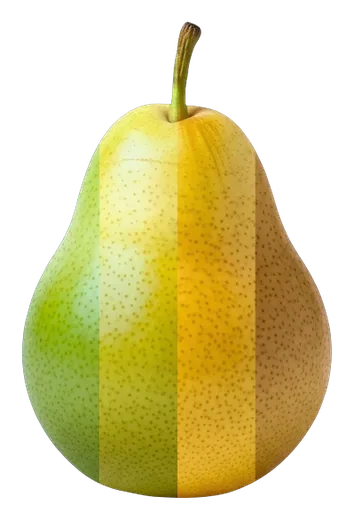
- Green body · 1–3 days Bartlett (Williams) skin still green on the body, and the narrow neck hard under a gentle press.
- Yellowing · nearly Green giving way to yellow on the body, the neck only just starting to soften.
- Neck gives · eat now A clear warm golden yellow with no green left on the body, and a neck that yields to a soft press while the body stays firm.
- Soft middle · past peak Soft around the middle as well as at the neck, and wrinkling across the body.
How to store
Unripe pears ripen best at room temperature — do not refrigerate an unripe pear expecting it to ripen there. To speed ripening, place in a paper bag with an apple or banana (both high ethylene producers); a Bartlett (Williams) will typically ripen in 1–3 days at 65–70 °F (18–21 °C). Once ripe, refrigerate at 34–40 °F (1–4 °C) and consume within 3–5 days. Bosc and D'Anjou require cold-conditioning to ripen; most retail fruit has been conditioned and will ripen at room temperature like Bartlett. If they remain rock-hard after 7+ days on the counter, cold-conditioning was incomplete — refrigerate for two to six weeks — Bosc at the short end, D'Anjou the long end — then bring it back to room temperature. Store away from strong-smelling foods — pear flesh absorbs odors easily in the refrigerator.
In the app
Scan
In the aisle, in seconds
Point the camera: pick or pass for that exact item, and the cue to trust next time.

Season where you live · Nutrients · Taste · Myths · Ayurveda


Free to install.
More to pick
Picking, storage, and freshness guidance is drawn from peer-reviewed postharvest research and agricultural extension sources. The sources are named in the app.