Fruits · Indian Gooseberry
How to pick a ripe Indian Gooseberry
Translucent pale-green and heavy for its size — that's a fresh one
How to pick
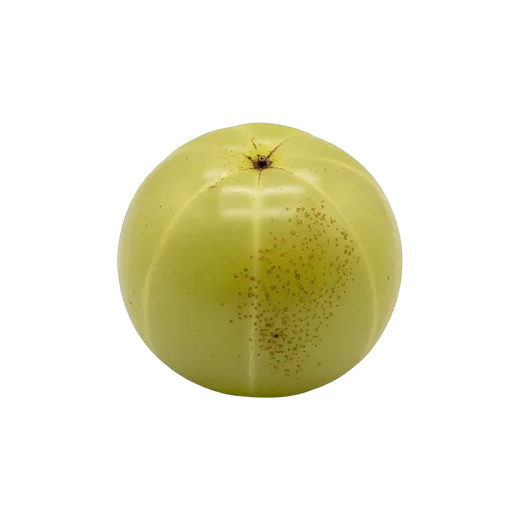
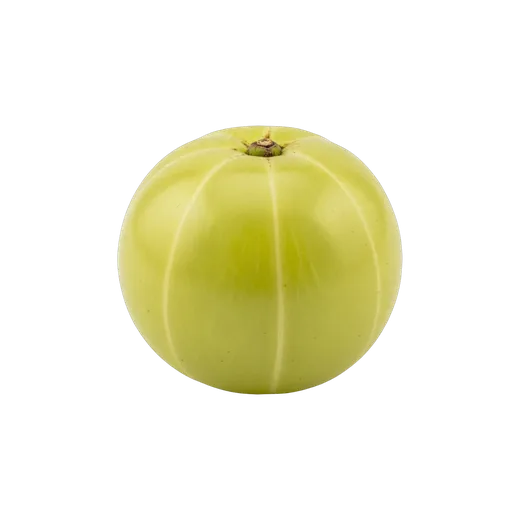
Look at the skin first: a fresh Indian gooseberry is translucent pale green to light greenish-yellow with a smooth, slightly waxy surface that catches the light. The six faint vertical furrows and pale striations should be clean and even, with no brown speckles or spots anywhere — small brown flecks are the first sign of aging. Then lift it: a fresh one is hard and noticeably heavy for its small size, dense and solid with no give. The skin should be taut and unbroken, with the fruit holding a full, round shape.
Red flags
- Sunken pits or water-soaked spots on the skin — chilling injury from being stored too cold
- Shriveled or wrinkled skin — moisture loss, the flesh inside has dried and turned fibrous
- Soft areas that yield to gentle pressure — internal breakdown has begun
- Cuts, cracks, or bruises — entry points for the black and blue mold this fruit is prone to
- An overall dull gray-brown cast instead of translucent green — well past prime
How to store
Store at cool room temperature for about 5–6 days, ideally with the stalk left on and unwashed. If refrigerating, use the warmest part of the fridge (the crisper drawer) at roughly 50–54 °F (10–12 °C) for up to about 2 weeks. The Indian gooseberry is chilling-sensitive: below about 43 °F (6 °C) it develops brown skin discoloration and surface pitting, so the main fridge compartment (35–40 °F [2–4 °C]) is too cold. Wash only just before use — surface moisture invites the black and blue mold it is prone to. Once cut, refrigerate and use within 1–2 days.
In the app
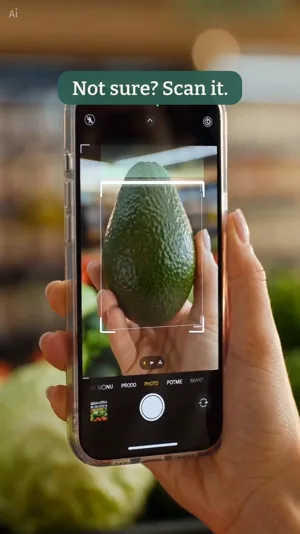
Scan
In the aisle, in seconds
Point the camera: pick or pass for that exact item, and the cue to trust next time.
Season where you live · Nutrients · Taste · Myths · Ayurveda


Free to install.
More to pick
Picking, storage, and freshness guidance is drawn from peer-reviewed postharvest research and agricultural extension sources. The sources are named in the app.