Vegetables · Asparagus
How to pick good Asparagus
Tight, compact tips — look for closed bracts to pick peak-fresh asparagus
How to pick
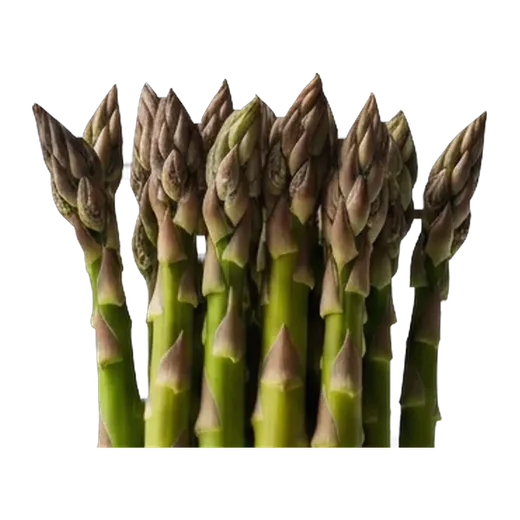
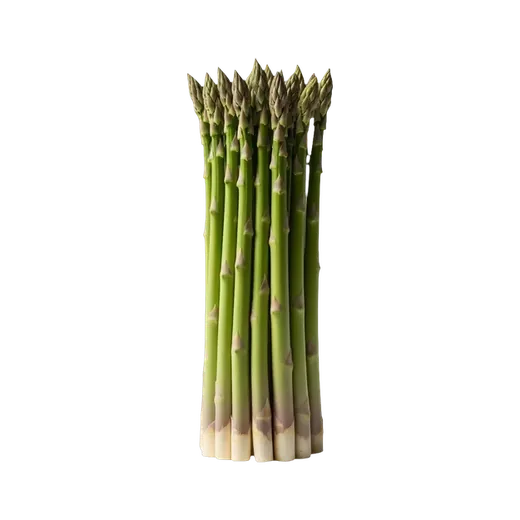
Start at the tips — the bract scales at the very top of each spear should be tightly closed and compact, ideally showing a slight purple or violet blush at the apex. Splayed, feathery, or widely open tips mean the spear is past its best. Then scan the color from tip to base: fresh asparagus is a rich, saturated deep green all the way down with no yellowing or fading near the tip. Glance at the cut ends — they should look pale and moist, not dried out or ringed with a beige callous. Lift the bunch: it should feel firm and dense, with spears that stand straight rather than drooping to the side.
Red flags
- Yellowing or browning of the bract tips beyond the earliest faint fade — stalks at this stage will be noticeably less sweet and beginning to turn fibrous
- Beige-ringed or hollow-looking cut ends — indicates significant moisture loss and accelerating lignification; stalks will be stringy when cooked
- A bunch that feels noticeably light for its size — asparagus loses water weight quickly after harvest, and a light bunch will cook down stringy and tough regardless of how the tips look
- Dark wet patches or slime at the tip cluster or the cut base — bacterial soft rot has begun
How to store
32–36 °F (0–2 °C). Stand spears upright in a jar with 1 inch (2–3 cm) of cold water (like flowers in a vase) and refrigerate loosely covered with a plastic bag; refresh the water every 1–2 days. Keeps crisp for 4–7 days. Alternatively, wrap the cut ends in a damp paper towel, seal in a bag, and refrigerate upright. Do not store flat — asparagus spears continue to grow actively after harvest and will curve their tips upward when laid horizontal, a response to gravity.
In the app
Scan
In the aisle, in seconds
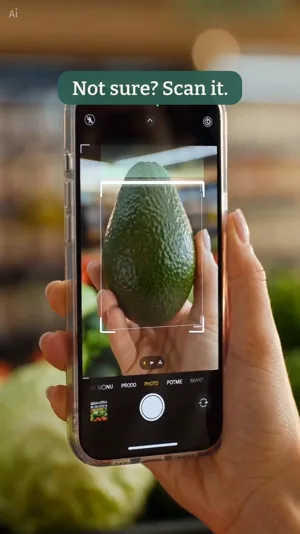
Point the camera: pick or pass for that exact item, and the cue to trust next time.
Season where you live · Nutrients · Taste · Myths · Ayurveda


Free to install.
More to pick
Picking, storage, and freshness guidance is drawn from peer-reviewed postharvest research and agricultural extension sources. The sources are named in the app.