Vegetables · Cauliflower
How to pick good Cauliflower
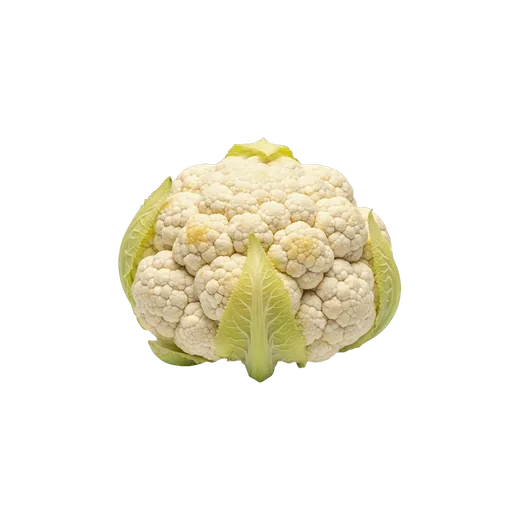
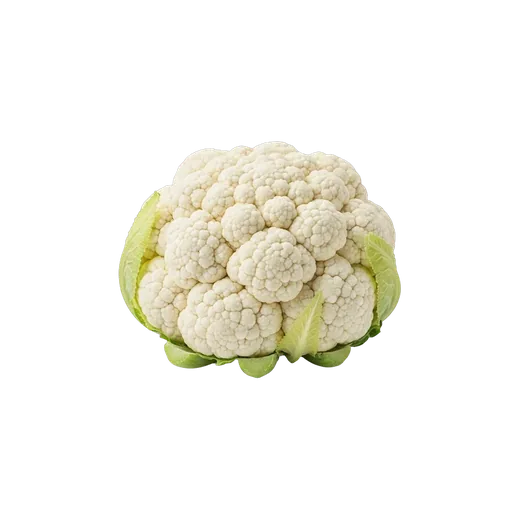
Tight ivory dome — florets pressed flush, no gaps, near-odorless
How to pick
Look for a tightly packed, dome-shaped curd — the individual florets should press flush against one another with no visible gaps or separation. Color should be creamy white to slightly ivory; a touch of natural ivory is fine and often indicates full maturity, but yellowing or browning patches signal sun exposure and age. The surrounding green leaves should still be wrapped snugly around the head, not flopped open or wilted. Avoid heads where the curd looks 'riced' — individual curds pulling apart into loose bumps — which signals the head is past its prime and will have a grainy texture and stronger cabbage-like flavor.
Red flags
- Strong sulfurous or cabbagey odor from an uncut head — fresh whole heads are nearly odorless
- Brown bruise-like patches or wet spots on the curd — bruising or early bacterial soft rot
- Wrapper leaves limp, slimy, or with blackened edges — indicates the head has been out of cold chain too long
- Small dark brown to black spots on the curd — early Alternaria black spot; fuzzy gray growth means Botrytis gray mold instead
- Feels surprisingly light for its size when cradled in both hands — a fresh head is dense and heavy
How to store
Refrigerate in a loose plastic bag in the crisper; keeping stem-up can help keep moisture off the curd. Do not wash before storing. Use within 5–7 days. Once cut, wrap the exposed curd tightly in plastic wrap and use within 2–3 days.
In the app
Scan
In the aisle, in seconds
Point the camera: pick or pass for that exact item, and the cue to trust next time.

Season where you live · Nutrients · Taste · Myths · Ayurveda


Free to install.
More to pick
Picking, storage, and freshness guidance is drawn from peer-reviewed postharvest research and agricultural extension sources. The sources are named in the app.