Fruits · Gooseberry
How to pick a ripe Gooseberry
Plump, taut skin with the veins showing through — that's a fresh one
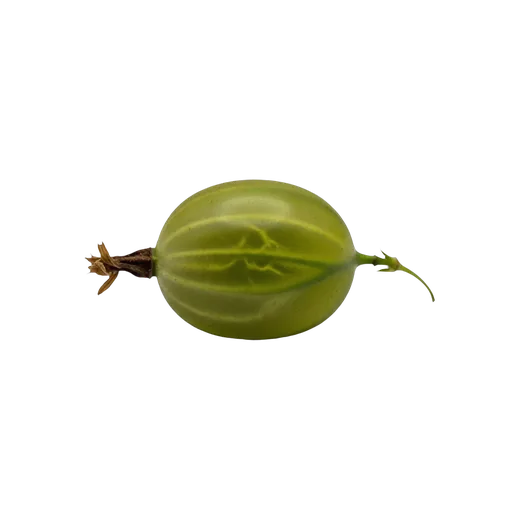
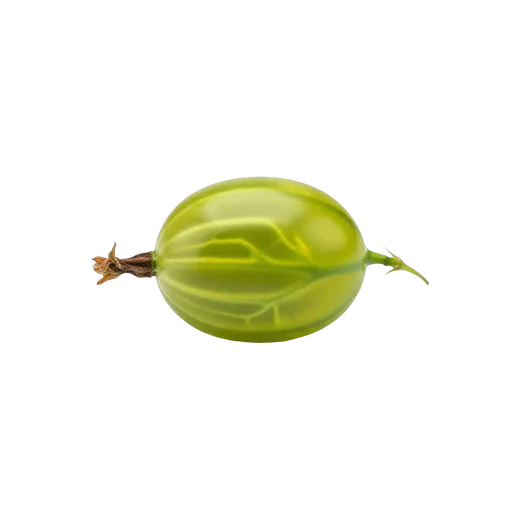
How to pick
Look at the skin first: a fresh gooseberry has translucent pale-green to greenish-yellow skin with the darker longitudinal veins clearly visible through it, taut and plump with a faint waxy bloom that gives a soft dusty sheen. The skin should be tight and unbroken — no splits, no brown patches, no fuzzy spots. Then lift it: a fresh gooseberry is firm and noticeably heavy for its small size, dense and fully filled out. Dessert-ripe berries give only the very slightest yield; rock-hard ones are under-ripe but keep well and are fine for cooking. Check the little calyx frill at the blossom end is dry and intact, and remember gooseberries do not ripen further after picking — buy them at the ripeness you want to use.
Red flags
- Splits or fine cracks in the skin — overripe or roughly handled, and an entry point for gray mold
- Fuzzy gray patches, especially where berries have been touching — gray mold (Botrytis) has set in
- Wrinkled or shriveled skin — water loss from being stored too long or too dry
- Sunken brown soft spots — bruising or internal breakdown
- Sticky, weeping, or leaking skin — the berry has broken down and is no longer sound
How to store
Store unwashed in the fridge. Gooseberries keep best cold and humid — the coldest part of the fridge or the crisper drawer, ideally around 31–34 °F (0–1 °C) at high humidity. They last roughly 1–2 weeks this way (commercial cold storage can reach about 3 weeks). Gooseberries are non-climacteric, so they will not ripen further after picking — buy them at the ripeness you want. Wash only just before use: surface moisture invites the gray mold (Botrytis) they are prone to, especially where berries touch. They also freeze very well whole for cooking later.
In the app
Scan
In the aisle, in seconds
Point the camera: pick or pass for that exact item, and the cue to trust next time.

Season where you live · Nutrients · Taste · Myths · Ayurveda


Free to install.
More to pick
Picking, storage, and freshness guidance is drawn from peer-reviewed postharvest research and agricultural extension sources. The sources are named in the app.