Fruits · Jackfruit
How to pick a ripe Jackfruit
A sweet tropical smell through the rind means ripe — no smell means it isn't there yet
How to pick
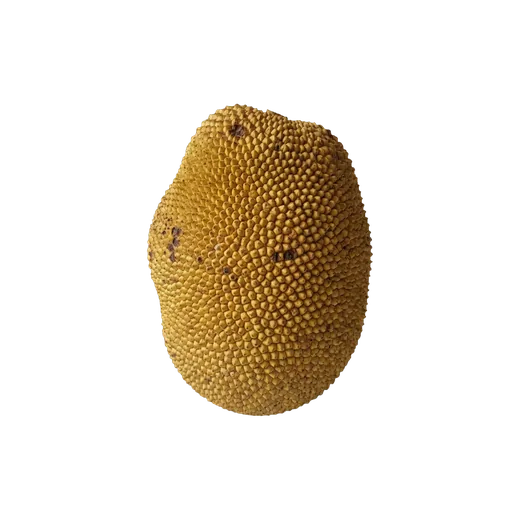
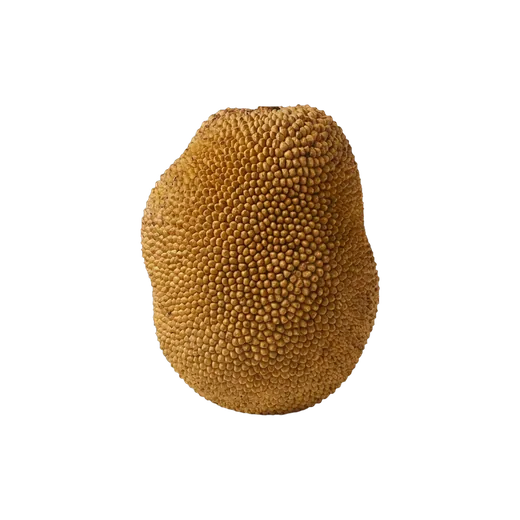
Look for a rind that has turned from green to an overall yellowish-brown or brownish-yellow, with the pyramid-shaped spines flattened and more widely spaced rather than sharp and tightly packed. The rind should give slightly to firm pressure between the spines, not feel rock-hard. A ripe fruit also gives off a strong, sweet, tropical aroma even through the rind, while a green one has almost none. If you can give it a firm tap, a ripe jackfruit answers with a dull, hollow thud; an unripe one sounds solid and dense. Because a whole jackfruit is enormous and finishes ripening fast once it starts — three to ten days on the counter — favor one already close to these signs, and plan to break it down within a few days of softening.
Red flags
- Split or cracked rind, or sticky latex weeping from the skin — the flesh inside is already spoiling
- Widespread dark-brown to black patches covering large areas of the rind — over-ripe or cold-damaged
- Soft, sunken, or mushy spots that give way easily to light pressure
- A sour, fermented, or alcoholic smell instead of a sweet ripe aroma
- Visible mold, especially in the crevices between the spines
How to store
Keep a whole jackfruit at cool room temperature, ideally about 55 °F (13 °C) at high humidity — a cellar or cool pantry, not the refrigerator — where it keeps for roughly 2–4 weeks. Colder than about 54 °F (12 °C) brings chilling injury instead of a longer life: the rind develops dark-brown discoloration and the pulp browns and turns off-flavor. Once cut, the bulbs go in an airtight container in the refrigerator and keep 3–5 days; freeze them for longer. An unripe (green) fruit continues to ripen off the tree, and mature-green fruit responds to a short ethylene treatment (100 ppm for about a day), which is how handlers even out ripening.
In the app
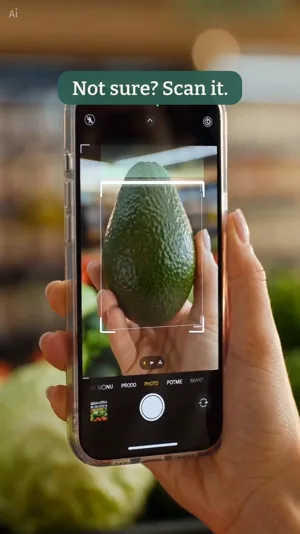
Scan
In the aisle, in seconds
Point the camera: pick or pass for that exact item, and the cue to trust next time.
Season where you live · Nutrients · Taste · Myths · Ayurveda


Free to install.
More to pick
Picking, storage, and freshness guidance is drawn from peer-reviewed postharvest research and agricultural extension sources. The sources are named in the app.