Fruits · Mulberry
How to pick a ripe Mulberry
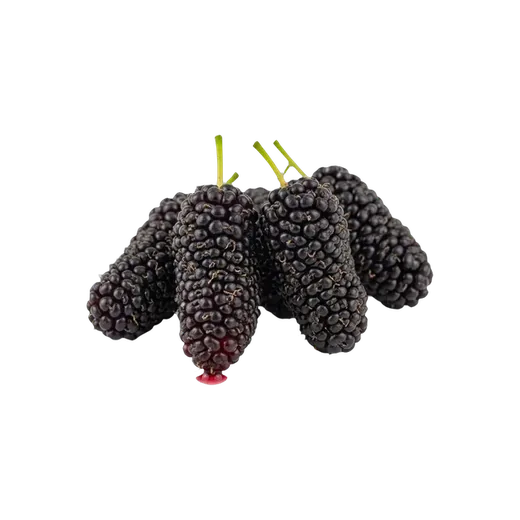
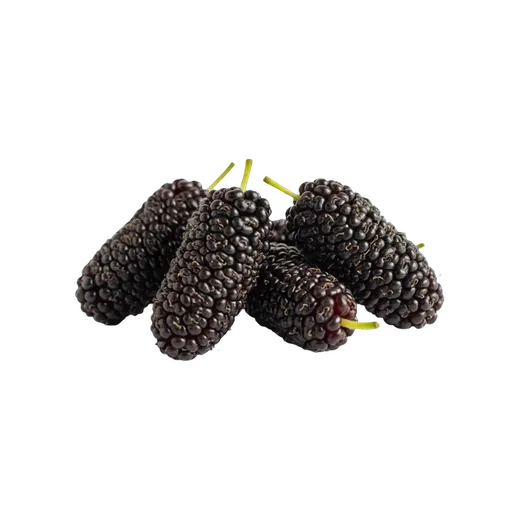
Plump, evenly colored drupelets with a clean dry base — no juice stains means they haven't been crushed
How to pick
Look for berries with an even, fully developed deep color across every drupelet — uniform purple-black on dark mulberries, or an even creamy pale-pink on white mulberry — with no green, red, or pale unripe segments. Mulberry is non-climacteric: it does not ripen, sweeten, or darken after picking, so the color and flavor you see are final. The drupelets should look plump and swollen, the whole berry full and rounded, never shriveled or with sunken gaps. Most important for such a fragile fruit: check the base of the container — it should be clean and dry, with no reddish juice stains or wet patches that mean crushed, leaking berries underneath. The central stem should still look green and fresh, not browned. If the berries are loose and you can smell them, a sweet fruity fragrance confirms ripeness; a sour or fermented smell means they are breaking down.
Red flags
- Reddish-dark juice pooling or wet patches at the base of the container — crushed, leaking berries hidden below the top layer
- Fuzzy gray-white mold on any berry — spreads fast through the whole container once it starts
- Many berries with green, red, or pale drupelets — picked underripe; non-climacteric fruit will not sweeten or darken at home
- Shriveled, deflated drupelets with sunken gaps in the cluster — water loss, past peak
- Sour or fermented smell rising from the container — the fruit is already fermenting
How to store
Refrigerate immediately, unwashed, spread in a single shallow layer in a vented container at 32–40 °F (0–4 °C), in the coldest part of the fridge. Do not wash before storing — surface moisture invites mold and softening on this very fragile fruit. Best within 2–3 days; eat as soon as the first berries soften or weep. Keep stacking to a minimum so the weight doesn't crush the lower layer. Rinse gently in cold water just before eating.
In the app
Scan
In the aisle, in seconds
Point the camera: pick or pass for that exact item, and the cue to trust next time.

Season where you live · Nutrients · Taste · Myths · Ayurveda


Free to install.
More to pick
Picking, storage, and freshness guidance is drawn from peer-reviewed postharvest research and agricultural extension sources. The sources are named in the app.