Vegetables · Spring Onion
How to pick a good Spring Onion
Vivid green to the tip and a clean white base — the crispest bunch wins
How to pick
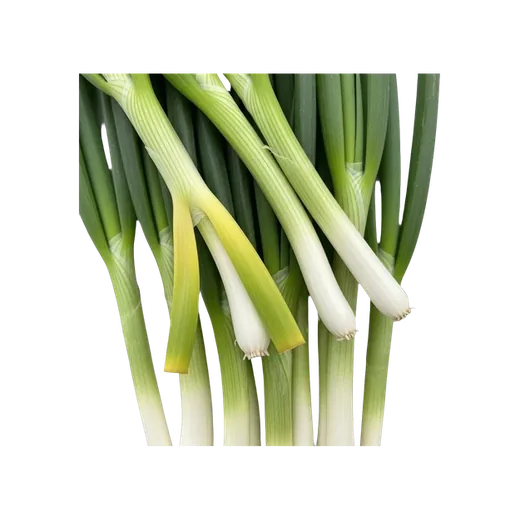
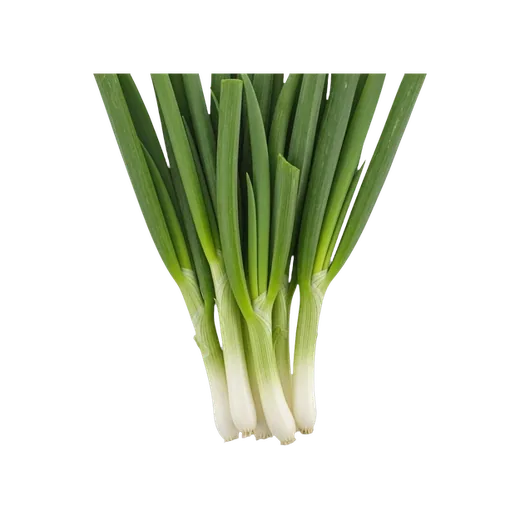
Color is your fastest cue: look for bunches that are uniformly vivid, bright green from the tips all the way to where the leaves turn pale near the base. That rich, saturated green is peak freshness. Then look at how the leaves hold themselves: fresh spring onions stand upright or curve gently with clear structure; outer leaves that droop or flop outward are losing turgor and are past their best. Glance at the white base — it should look clean and firm with intact skin, not wrinkled or browning. A gentle sniff of the cut base should reveal a mild, fresh onion aroma; a sour, fermented, or rotting smell means the bunch is older than it looks.
Red flags
- Yellow or pale tinge at the leaf tips — the first sign of chlorophyll breakdown; pass this bunch by
- Outer leaves drooping or flopping outward rather than holding upright — turgor is already gone
- Any browning or wrinkling of the outer papery skin at the white base
- Sour, fermented, or rotting smell at the cut base — distinct from the clean mild onion aroma of a fresh bunch
How to store
32–40 °F (0–4 °C). Wrap unwashed in a slightly damp paper towel and place in a loosely sealed bag in the crisper — very high humidity (~90–95%) is key. Alternatively, stand the bunch upright in a glass with 1–2 inches (2.5–5 cm) of water and refrigerate. Use within 7–14 days. Wash just before use; standing surface moisture on leaves accelerates decay.
In the app
Scan
In the aisle, in seconds
Point the camera: pick or pass for that exact item, and the cue to trust next time.

Season where you live · Nutrients · Taste · Myths · Ayurveda


Free to install.
More to pick
Picking, storage, and freshness guidance is drawn from peer-reviewed postharvest research and agricultural extension sources. The sources are named in the app.