Roots · Sweet Potato
How to pick a good Sweet Potato
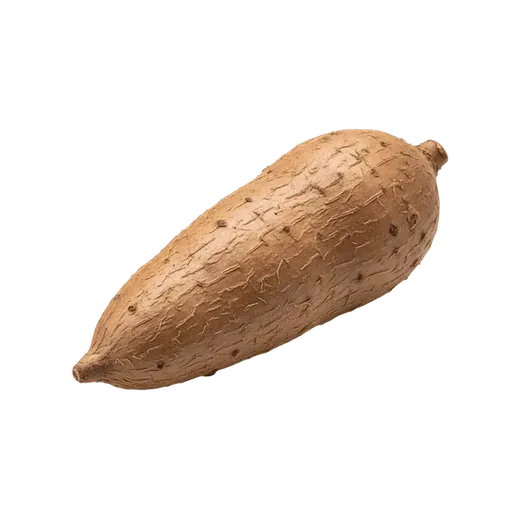
Pick the heaviest one — dense weight means firm, solid flesh, not pithy
How to pick
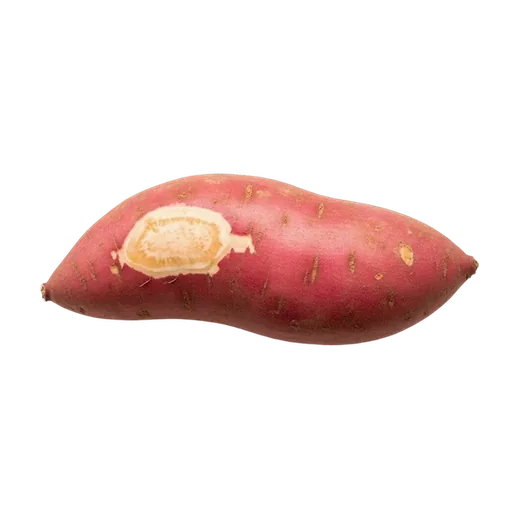
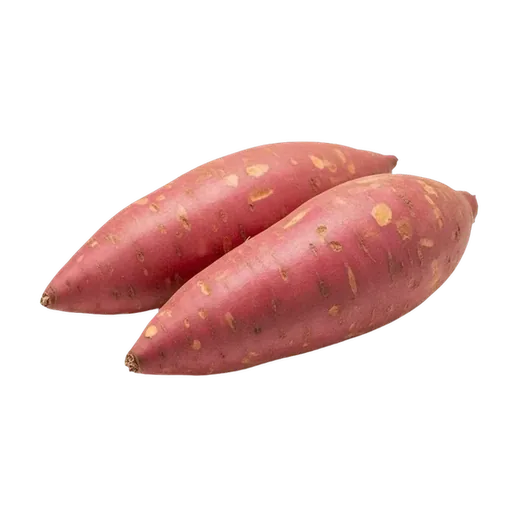
Pick firm sweet potatoes that feel dense and heavy for their size — pithy or hollow-feeling roots have lost dry matter and taste bland. Look for smooth, uniform skin with no abrasion patches or pale scraped areas. At both ends: very mild skin tightening at the tapered tips is acceptable, but wrinkling along the root body means significant moisture loss. No sprout buds at the stem end.
Red flags
- Scraped skin patch with dark or wet edges — a dry abrasion alone is cosmetic, but moist or darkening edges signal a rot entry point
- Soft or sunken spots anywhere on the body — internal tissue damage or early decay
- Wrinkling or shriveling along the root body (not just tapered tip ends) — significant moisture loss, texture will be compromised
- Sprout buds at the stem end longer than ¼ inch (6 mm) — prolonged warm storage, quality has declined
- Wet, sunken dark lesion with a sour or musty smell — soft rot (Rhizopus or bacterial); discard
How to store
Cool, dark, dry place — pantry shelf or paper bag, **not the refrigerator**. Below 50 °F (10 °C) causes chilling injury: surface pitting and internal breakdown that may not be visible on the outside. Ideal temperature: 55–60 °F (13–16 °C) with airflow — at this temperature, cured sweet potatoes last up to 2 months. At typical home pantry temperatures (65–72 °F [18–22 °C]), expect 1–2 weeks before sprouting and moisture loss accelerate. Keep away from ethylene-producing fruit such as bananas and mangoes.
In the app
Scan
In the aisle, in seconds
Point the camera: pick or pass for that exact item, and the cue to trust next time.

Season where you live · Nutrients · Taste · Myths · Ayurveda


Free to install.
More to pick
Picking, storage, and freshness guidance is drawn from peer-reviewed postharvest research and agricultural extension sources. The sources are named in the app.