Herbs · Chives
How to pick fresh Chives
Clean allium scent without crushing — bright green and upright means still fresh
How to pick
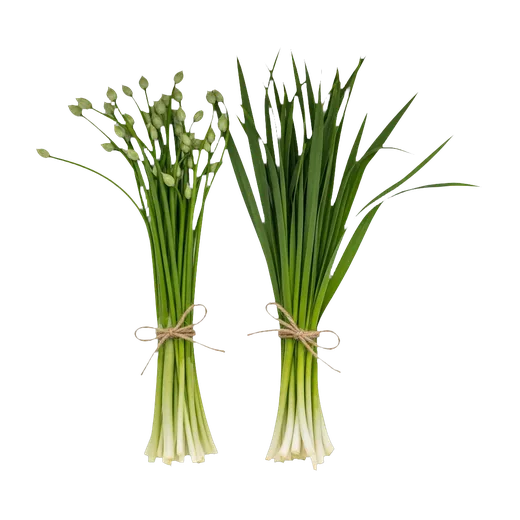
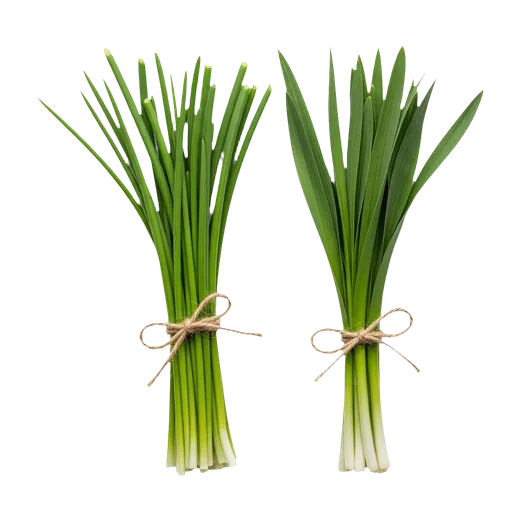
Look for slender bright green stems standing upright in the bunch — common chives are hollow tubes, garlic chives are flat blades. Lift the bunch and bring the stem ends close — a fresh bunch releases a clean onion (or garlic, for the Chinese variety) aroma without any crushing. Stems should hold their shape when the bunch is lifted, not droop or flop under their own weight. Avoid bolted common chives, where the round hollow stems have sent up flower scapes — those stems turn tough and the flavor weakens once the plant flowers. Garlic chives are the exception: their young flower buds are one of the commonly eaten parts of the plant, so a flat-bladed bunch carrying buds is not a bunch to reject. Avoid bunches with wet or slimy stem ends.
Red flags
- Flower buds or open flowers on common chives — bolting means tough stems and diminished flavor. Garlic chives are the exception: their buds are eaten, so budded flat blades are not a fault
- Yellowing along stem tops or bases
- Sliminess spreading up the stems from the base
- Stems gone translucent or water-soaked at the base — bacterial breakdown
- Fermented or sulfurous-rotting smell rather than clean allium
How to store
Wrap unwashed bunch in a slightly damp paper towel inside a zip bag, refrigerate. Expect them to last about a week in a home refrigerator; under ideal commercial conditions (32 °F [0 °C]), they can last 7–10 days. Chopped chives freeze well in flat zip bags and go straight into hot dishes. Avoid home-drying chives — flavor collapses with hot-air drying (commercial freeze-dried versions hold up better).
In the app
Scan
In the aisle, in seconds
Point the camera: pick or pass for that exact item, and the cue to trust next time.
Season where you live · Nutrients · Taste · Myths · Ayurveda


Free to install.
More to pick
Picking, storage, and freshness guidance is drawn from peer-reviewed postharvest research and agricultural extension sources. The sources are named in the app.