Fruits · Lemon
How to pick a ripe Lemon
Smooth, fine skin — thin pith, more juice
How to pick
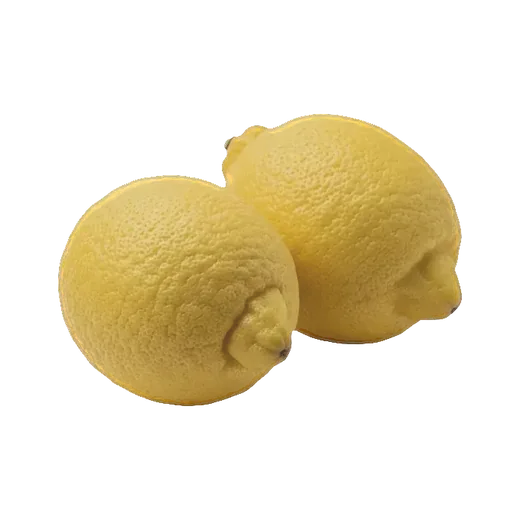
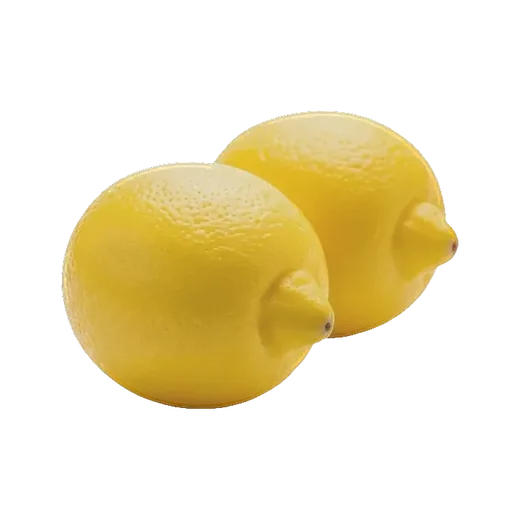
Look at the skin, and compare lemons within the same bin: among fruit of one kind, a finer-grained, smoother surface signals thinner pith and more room for juice inside, while a bumpy, coarse, or pebbled texture means thick pith — less juice per squeeze. Across kinds, rind texture is a variety trait and not a freshness one — Eureka lemons are naturally rougher and more ridged, Lisbon smoother — so it is not a reason to walk past a whole display. Then lift it: a juicy lemon feels surprisingly heavy for its size because it is mostly liquid. A light lemon with thick skin is mostly pith.
Red flags
- Feels light for its size — pith-heavy or dried out internally
- Soft, spongy spots on the surface — decay has started underneath
- Wrinkled or shrunken skin — moisture has been lost, juice content is low
- Dull brownish-yellow or gray patches — past peak, skin has begun breaking down
How to store
Store at room temperature for up to 1 week. For longer storage, keep in the produce drawer (the warmest part of the fridge) in a sealed bag for up to 4 weeks — standard fridge temps below 40°F (4°C) can cause pitting and early decay, so avoid the back of the fridge. Cut lemons should be wrapped tightly and used within 3–4 days. Juice can be frozen in ice-cube trays for up to 4 months.
In the app
Scan
In the aisle, in seconds
Point the camera: pick or pass for that exact item, and the cue to trust next time.

Season where you live · Nutrients · Taste · Myths · Ayurveda


Free to install.
More to pick
Picking, storage, and freshness guidance is drawn from peer-reviewed postharvest research and agricultural extension sources. The sources are named in the app.