Fruits · Raspberries
How to pick ripe Raspberries
Every drupelet vivid red — matte, plump, no pink patches
How to pick
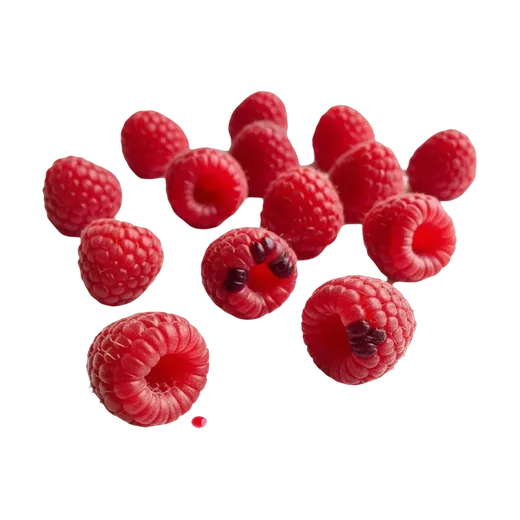
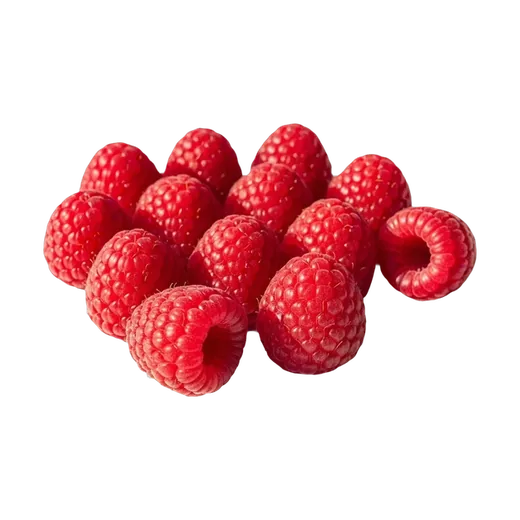
Look for full, uniform bright red color on every drupelet of every berry — all drupelets should be vivid and equally saturated, with no pink or white zones (underripe, will not ripen further) and no dark crimson or dull red patches (overripe or bruised). The surface should look matte and slightly fuzzy, not glossy. Check for juice staining inside the container — wet spots or reddish stains on the base indicate crushed or leaking berries. Sniff the container: fresh raspberries have a clear, sweet fruity-floral fragrance; fermented, vinegary, or flat smell is a warning. Unlike bananas or avocados, raspberries are non-climacteric — they stop ripening the moment they're picked.
Red flags
- Dark crimson, dull, or purple-toned drupelets on multiple berries — color has shifted past peak
- Pink or pale white drupelets — harvested underripe, will not ripen further at home
- Juice staining or wet patches at the container base or on surrounding berries — leaking from cracked drupelets
- Gray fuzzy mold on any drupelet — Botrytis spreads rapidly to adjacent berries; entire container at risk
- Berries crumbling apart with drupelets separating easily — crumbly fruit defect from viral or mite damage, not normal spoilage
How to store
Refrigerate unwashed in the original clamshell at 32–36°F (0–2°C). Do not wash before storing — moisture accelerates mold. Consume within 2–3 days. Wash only immediately before eating.
In the app
Scan
In the aisle, in seconds
Point the camera: pick or pass for that exact item, and the cue to trust next time.

Season where you live · Nutrients · Taste · Myths · Ayurveda


Free to install.
More to pick
Picking, storage, and freshness guidance is drawn from peer-reviewed postharvest research and agricultural extension sources. The sources are named in the app.