Fruits · Watermelon
How to pick a ripe Watermelon
Creamy-yellow ground spot means it ripened on the vine — the deeper the yellow, the sweeter
How to pick
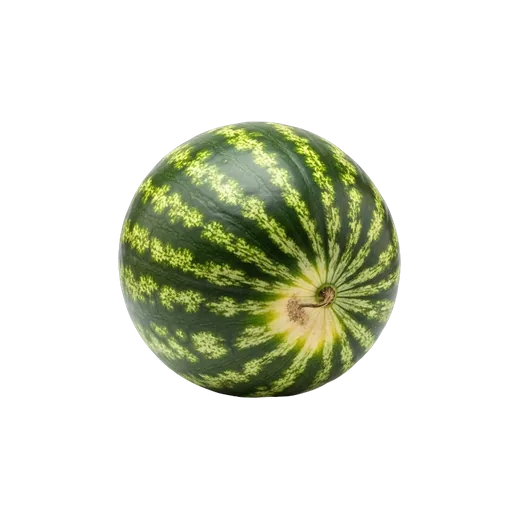
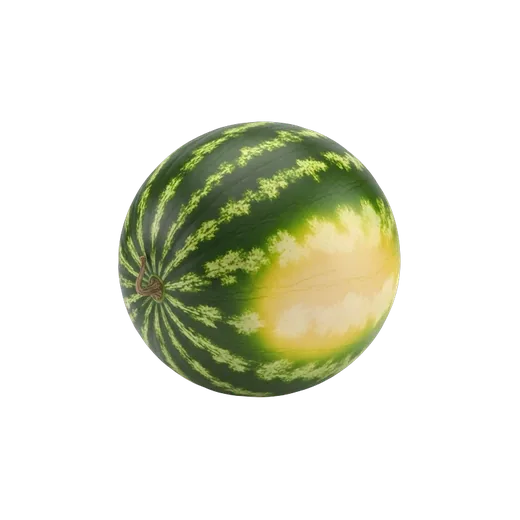
Look for a creamy-yellow ground spot (where it rested on the field) — white means under-ripe. Tap it: a deep hollow thump signals ripe. At a farm stand or u-pick, also check the tendril closest to the stem — brown and dried means vine-ripe; green means it was cut early.
Red flags
- Ground spot bright orange or deep orange — past peak, not just riper; the sweet spot is cream to butter yellow
- Unusually shiny or waxy rind — the rind naturally dulls at full maturity; gloss means under-ripe
- Light for its size when lifted — a dense melon has thick flesh; one that feels surprisingly light often has thin walls or dry interior
When will it be ripe?
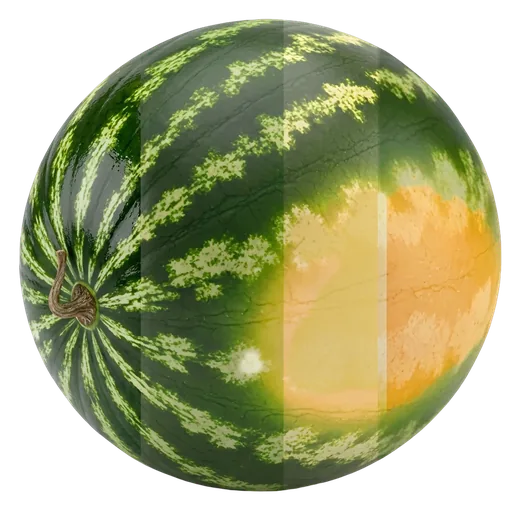
- Shiny rind · no yellow yet The rind still looks shiny and waxy, with no yellow anywhere — the ground spot where it sat in the field is white or pale green.
- Cream spot · nearly there The ground spot has turned pale cream and the rind's shine is starting to dull.
- Buttery spot · eat now A deep creamy butter-yellow ground spot, and a rind gone matte rather than shiny.
- Orange spot · past peak The ground spot has gone bright or deep orange, and the rind is dull and dry-looking.
How to store
Whole melons keep best at room temperature for 7–10 days. Do not refrigerate whole — the ideal hold is 45–50 °F (7–10 °C), and below about 45 °F (7 °C) a whole melon takes chilling injury (rind pitting, flavor and lycopene loss); a home fridge runs near 40 °F (4 °C). Once cut, wrap tightly and refrigerate; use within 3–5 days.
In the app
Scan
In the aisle, in seconds
Point the camera: pick or pass for that exact item, and the cue to trust next time.

Season where you live · Nutrients · Taste · Myths · Ayurveda


Free to install.
More to pick
Picking, storage, and freshness guidance is drawn from peer-reviewed postharvest research and agricultural extension sources. The sources are named in the app.