Vegetables · Ridge Gourd
How to pick a good Ridge Gourd
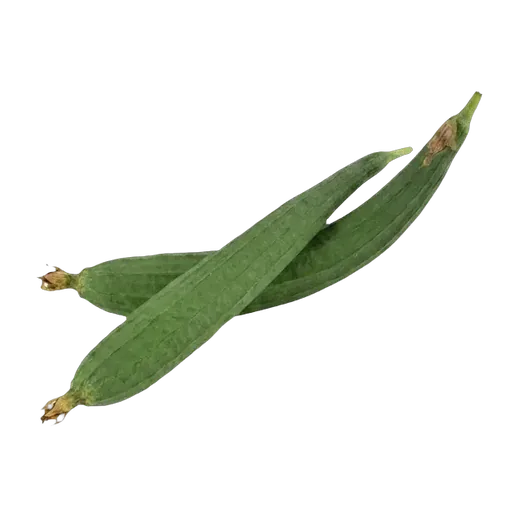
Pick a firm, bright-green gourd with sharp ridges — taut skin means it's young and tender
How to pick
Look for a uniform medium-to-dark green skin with crisp, sharp, well-defined ridges running the full length — sharp ridges and taut skin mean the gourd was picked young and tender. The skin should look fresh and lightly glossy, not dull or wrinkled, and the gourd should feel firm and heavy for its size when you cradle it in your palm (light weight means it has dried out or gone pithy inside). Check that the stem-end is still fresh and green rather than dried and browned. Choose a slimmer, young gourd over a very large one — oversized ridge gourds develop tough internal fiber and seeds, turning fibrous and spongy past their edible window.
Red flags
- Dull, faded, or yellowing green skin — aging and moisture loss
- Wrinkled or shriveled skin, or softened, rounded ridge edges
- A dried, browned, or missing stem-end
- An oversized, hard gourd — likely fibrous and seedy inside (over-mature)
- Soft, sunken, or water-soaked spots, especially after refrigeration (chilling injury) — decay setting in
How to store
Store unwashed in the refrigerator crisper, loosely wrapped to slow moisture loss, and use within about 5–7 days — ridge gourd is thin-skinned and dries out quickly. It is chilling-sensitive: prolonged cold (below ~50 °F [10 °C], which a standard fridge reaches) can cause surface pitting and dark sunken spots that often only show after it warms up, so keep it in the warmest part of the fridge and use it promptly. Once cut, wrap the exposed flesh and use within a day or two.
In the app
Scan
In the aisle, in seconds
Point the camera: pick or pass for that exact item, and the cue to trust next time.

Season where you live · Nutrients · Taste · Myths · Ayurveda


Free to install.
More to pick
Picking, storage, and freshness guidance is drawn from peer-reviewed postharvest research and agricultural extension sources. The sources are named in the app.